



Introduction
The internet has changed how people discover information. Instead of waiting for a newspaper, magazine, or television program, readers can now search for answers, explore trends, discover stories, and learn about new ideas within seconds.
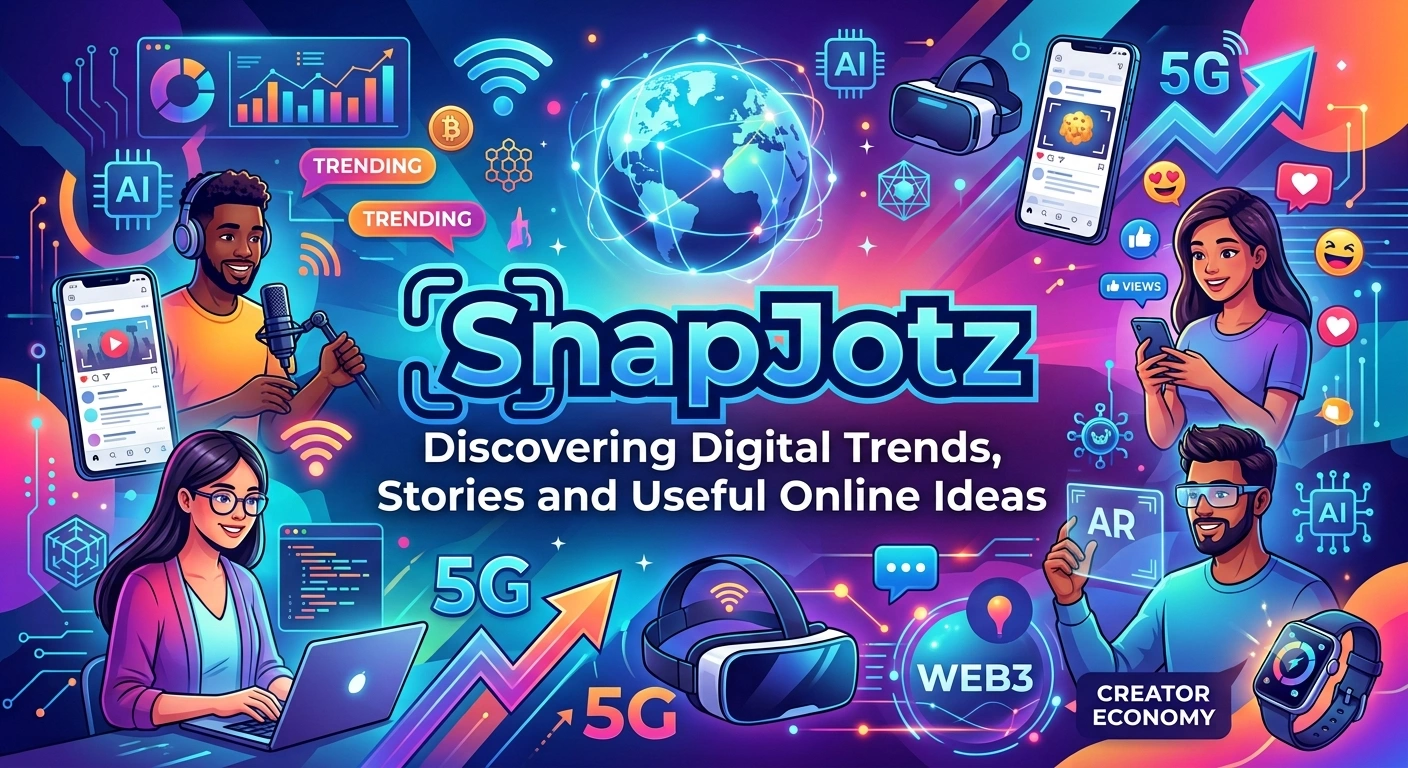
This shift has created a growing ecosystem of digital publications designed around the interests and search habits of online audiences. SnapJotz fits into this broader environment as a digital-content concept focused on discoverable stories, ideas, trends, and general-interest information.
The appeal of platforms like SnapJotz comes from variety. A reader might arrive looking for one particular topic and then discover related articles covering technology, lifestyle, entertainment, digital culture, or everyday ideas.
This guide explains what SnapJotz represents, why digital publishing continues to grow, how readers can evaluate online content, and what makes a modern digital article genuinely useful.
What Is SnapJotz?
SnapJotz is a digital publishing and content concept built around the idea of discovering short, accessible pieces of information, stories, ideas, and trends online.
The name itself suggests quick digital “jots” or snapshots of information. That concept fits modern browsing behavior, where people frequently move between search results, articles, social media posts, videos, and other digital content.
A broad online publication can potentially cover subjects such as:
- Technology
- Lifestyle
- Entertainment
- Digital trends
- Online culture
- Productivity
- Business
- Travel
- Everyday ideas
The specific categories and editorial direction of a website can change, so readers should refer to the current SnapJotz platform for its latest content and information.
Why Digital Publications Are Popular
Digital publications have several advantages over traditional information channels.
Readers can access content:
- From smartphones
- On tablets
- Through desktop computers
- Using search engines
- Through social media
- From shared links
- Through content recommendations
This convenience allows people to find information whenever they need it.
Digital publishing also allows articles to be updated, linked to related resources, and supplemented with multimedia such as images, videos, audio, and interactive elements.
What Kind of Content Can SnapJotz Explore?
A broad digital publication can cover many areas.
Technology
Technology content can explain:
- Apps
- Software
- Gadgets
- Artificial intelligence
- Online tools
- Cybersecurity
- Digital services
- Emerging technologies
Technology changes quickly, so readers should pay attention to publication and update dates.
Lifestyle
Lifestyle content can focus on practical areas of everyday life, including:
- Organization
- Productivity
- Hobbies
- Home ideas
- Personal development
- Entertainment
- Daily routines
Entertainment
Entertainment articles can cover movies, television, music, online culture, gaming, creators, and other popular media.
Digital Trends
Online trends can change rapidly.
Useful trend-focused articles should provide context and distinguish temporary viral moments from broader changes in digital behavior.
SnapJotz and the Modern Reader
The modern reader doesn’t always begin at a website’s homepage.
A typical discovery path might look like:
Search Query → Article → Related Article → New Topic → Further Discovery
For example, someone might search for a technology topic and discover a SnapJotz article. After reading it, they may explore another article about productivity, digital tools, or online trends.
This makes internal linking and clear content organization particularly valuable for digital publishers.
What Makes an Online Article Useful?
The internet already contains a huge amount of information.
Publishing more content does not automatically make a website more valuable.
A useful article should provide something readers can actually use.
Clear Purpose
The reader should understand what the article is intended to answer.
Relevant Information
The content should match the reader’s search intent.
Simple Structure
Headings, lists, tables, and short paragraphs make information easier to navigate.
Original Value
Articles should contribute useful explanations, examples, perspectives, or context.
Accuracy
Important factual claims should be checked against appropriate sources.
Freshness
Information that changes over time should be reviewed and updated.
Understanding Search Intent
Search intent refers to the reason behind a search.
Informational Intent
“What is SnapJotz?”
The user wants to understand the platform or concept.
How-To Intent
“How can I organize my digital files?”
The user wants practical instructions.
Commercial Intent
“Best digital tools for content creators”
The searcher is comparing products or services.
Navigational Intent
“SnapJotz website”
The user is trying to find a specific website.
Understanding intent helps publishers create pages that answer real questions instead of simply repeating keywords.
SnapJotz and SEO
Search engine optimization can help readers discover relevant content.
An article targeting SnapJotz can benefit from:
- A descriptive SEO title
- A concise meta description
- A useful introduction
- Organized H2 and H3 headings
- Natural keyword placement
- Internal links
- Relevant FAQs
- A descriptive URL
- Mobile-friendly design
- Original content
Keyword stuffing should be avoided.
Instead, the primary keyword can appear naturally alongside related phrases such as digital content, online publication, digital trends, online stories, and general-interest blog.
The goal should always be to satisfy the reader first.
Why E-E-A-T Matters
E-E-A-T stands for:
- Experience
- Expertise
- Authoritativeness
- Trustworthiness
These qualities are particularly important for subjects where inaccurate information can have significant consequences.
A digital publication can strengthen reader confidence by including:
- Author names
- Author biographies
- Publication dates
- Update dates
- Reliable sources
- Editorial guidelines
- Correction policies
- Contact information
These signals help readers understand who produced an article and how the information was prepared.
How Readers Can Evaluate SnapJotz Content
Readers should evaluate individual articles rather than automatically assuming that every page has the same level of authority.
Check the Date
Some information becomes outdated quickly.
Look at the Author
Relevant experience or expertise can add useful context.
Review Sources
Important claims should have appropriate evidence.
Compare Information
For significant topics, consult multiple reputable sources.
Find the Primary Source
When an article discusses a study, announcement, regulation, or technical specification, checking the original source can provide additional confidence.
Topics That Require Extra Verification
Not every online subject carries the same level of risk.
Extra care is appropriate when reading about:
- Health
- Finance
- Investments
- Legal matters
- Government rules
- Immigration
- Cybersecurity
- Personal safety
General-interest articles can be useful for learning about these subjects, but important decisions should be based on qualified professional or authoritative information.
SnapJotz and Technology
Technology is now part of almost every aspect of everyday life.
People use digital technology for:
- Communication
- Banking
- Shopping
- Education
- Entertainment
- Work
- Travel
- Business
This creates a constant demand for technology content that is understandable to ordinary users.
A strong technology article should answer more than “What is this?”
It should also explain:
- Why it matters
- How it works
- Who might benefit
- What limitations exist
- What readers should consider
Artificial Intelligence and Digital Content
Artificial intelligence is changing both technology and publishing.
AI can assist with:
- Research
- Writing
- Translation
- Image creation
- Video production
- Coding
- Data analysis
- Customer support
- Automation
At the same time, AI-generated information can contain mistakes.
Responsible digital publishing should therefore include human review, source verification, and editorial judgment when AI tools are used during content production.
Social Media and Online Trends
Social media has changed how people discover information.
Platforms can influence:
- Entertainment
- Shopping
- Marketing
- News discovery
- Creator culture
- Online communities
- Consumer behavior
Trends can emerge quickly and disappear just as quickly.
For this reason, articles about online trends should provide context instead of assuming that every viral topic represents a permanent cultural shift.
Digital Content and Everyday Life
The influence of digital content goes far beyond technology.
People use online information when deciding:
- What to buy
- Where to travel
- What to watch
- Which tools to use
- How to organize their time
- What skills to learn
- Which trends to follow
This is why practical, reader-focused content remains valuable.
An article that provides a clear answer or useful framework can be more helpful than a page filled with unnecessary information.
Why Mobile-Friendly Content Matters
Many people consume online content primarily through smartphones.
Digital publications should therefore prioritize:
- Responsive layouts
- Readable fonts
- Fast page loading
- Simple navigation
- Short paragraphs
- Clear headings
- Proper image sizing
A good mobile experience reduces friction and makes information easier to consume.
The Importance of Internal Linking
Internal linking helps readers move from one relevant topic to another.
For example:
Technology → AI → AI Tools → Productivity
Another content path could be:
Lifestyle → Organization → Daily Routines → Productivity
A third might be:
Entertainment → Online Culture → Social Media → Digital Trends
This creates a connected content ecosystem and encourages readers to explore more deeply.
How to Create Better SnapJotz-Style Articles
A broad publication still benefits from focused individual articles.
Writers can improve content by following a few principles.
Start With the Reader’s Question
Understand what the audience actually wants to know.
Give the Basic Answer Early
Readers shouldn’t have to scroll through unnecessary introductions.
Use Clear Headings
Good headings make long articles easier to scan.
Explain Difficult Concepts
Avoid unnecessary technical language.
Add Examples
Examples help readers understand abstract ideas.
Avoid Filler
Every section should contribute something useful.
Update Changing Information
Technology, social media features, trends, and other fast-moving subjects should be reviewed regularly.
Digital Publishing vs. Traditional Publishing
| Feature | Digital Publishing | Traditional Publishing |
|---|---|---|
| Distribution | Online | Primarily print |
| Updates | Flexible | Usually edition-based |
| Searchability | High | Limited |
| Sharing | Immediate | More difficult |
| Multimedia | Video, audio, interactive elements | Mostly static |
| Global access | Potentially worldwide | Distribution dependent |
| Publishing frequency | Flexible | Usually scheduled |
Digital publishing offers convenience and speed, while traditional publishing continues to provide a curated physical reading experience.
How Readers Can Get More Value From SnapJotz
A few simple habits can improve online research.
Start With a Specific Question
Know what information you need.
Scan the Article
Use headings and lists to find relevant sections.
Check the Date
This is especially important for technology and current trends.
Review the Sources
Look for evidence supporting important claims.
Compare Information
For important decisions, consult multiple reputable sources.
Explore Related Content
Related articles can provide additional context and perspectives.
The Future of Digital Content
Online publishing continues to evolve.
Readers now discover information through:
- Search engines
- Social media
- Video platforms
- Podcasts
- News aggregators
- Email newsletters
- Online communities
- AI-powered search
Future digital publications may increasingly combine traditional articles with:
- Video
- Audio
- Interactive graphics
- Data visualization
- Expert commentary
- Personalized recommendations
These developments will create new opportunities for publishers.
However, the basic principle remains unchanged: content needs to be useful, understandable, accurate, and trustworthy.
Frequently Asked Questions
What is SnapJotz?
SnapJotz is a digital-content concept centered around discovering stories, ideas, trends, and general-interest information online.
What topics can SnapJotz cover?
A broad digital platform can cover technology, lifestyle, entertainment, digital trends, productivity, business, travel, online culture, and other general-interest subjects.
Is SnapJotz a technology website?
It can include technology content, but the broader concept of a digital publication is not necessarily limited to technology.
Why are online content platforms popular?
They give readers convenient access to information through smartphones, computers, search engines, social media, and other digital channels.
How can I determine whether an online article is reliable?
Check the author, publication date, sources, evidence, and purpose of the article. For important topics, compare the information with authoritative or primary sources.
Can I rely on online articles for important decisions?
Online articles can provide useful background information, but health, financial, legal, investment, and safety-related decisions should be verified with appropriate professionals or authoritative sources.
Conclusion
SnapJotz represents the broader evolution of digital publishing, where readers can discover stories, ideas, trends, and useful information through online platforms.
The modern reader has more choices than ever. Search engines, social media, AI-powered discovery, newsletters, podcasts, and video platforms all compete for attention.
This makes quality increasingly important.
The strongest digital content is not simply content that contains a large number of keywords. It is content that understands the reader’s question and provides a clear, useful answer.
For a platform like SnapJotz, this means creating content that is relevant, accessible, well organized, original, and appropriately verified.
Readers also have an important role to play. Checking publication dates, examining sources, comparing information, and finding primary references can make online research more reliable.
Technology will continue to change the way information is created and discovered. Artificial intelligence, recommendation systems, mobile devices, and new media formats will likely reshape digital publishing even further.
Yet the fundamental purpose of useful content will remain the same: helping people understand something, discover an idea, solve a problem, or explore a subject they care about.
In that environment, platforms built around thoughtful digital content can continue to provide value by making information easier to discover and understand.







[…] GoralBlue.com is associated with this broader online publishing model. […]